 +90 539 716 24 01
COPD treatment slows disease progression, reduces exacerbations, and improves quality of life through medications, breathing exercises, oxygen therapy, and lifestyle modifications.

Chronic Obstructive Pulmonary Disease (COPD) is a progressive lung disease characterized by the narrowing of the airways. It is not fully reversible, but it is preventable and treatable.
The most important risk factor for COPD is smoking. The use of other tobacco products such as pipes, cigars, and hookah can also cause COPD. Passive exposure to tobacco smoke contributes to the development of COPD as well.
Other proven causes of COPD include exposure to dust and chemicals in the workplace (vapors, dusty and smoky environments) and indoor air pollution caused by burning organic fuels (wood, dung, etc.) for cooking and heating in poorly ventilated homes.
Outdoor air pollution is also believed to contribute to the development of COPD. Additionally, certain genetic conditions, such as alpha-1 antitrypsin deficiency, can lead to COPD.
In patients with risk factors, if there are symptoms such as exertional shortness of breath, cough, and sputum, COPD should be considered as a possible diagnosis.
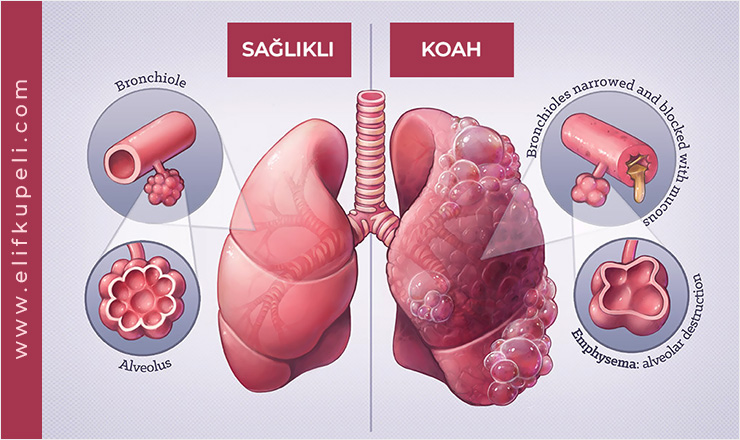
The definitive diagnosis of COPD is confirmed through pulmonary function tests. These tests are used not only for diagnosis but also to determine the severity of the disease and to monitor its progression. Pulmonary function testing is easily performed using spirometry, which measures the forced expiratory volume in the first second (FEV₁) and forced vital capacity (FVC).
In addition, a chest X-ray, complete blood count, and biochemical tests are usually performed. In advanced stages, an arterial blood gas test may be requested, and a CT scan can be done if deemed necessary.
Patients with severe or very severe COPD may experience periodic worsening of their symptoms. Cough, shortness of breath, and sputum production increase, and the consistency and color of the sputum may change. This condition is called a COPD exacerbation. The most common cause of exacerbations is intercurrent infections.
Previously, COPD was classified based solely on certain measurements from spirometry (pulmonary function tests). Today, however, COPD is classified into four groups—mild, moderate, severe, and very severe—based on spirometry results, symptoms, exacerbation frequency, and the presence of comorbidities.
When diagnosed early, COPD is a treatable disease, and its progression can be halted. However, any lung damage that has already occurred is irreversible. Treatment can alleviate symptoms, prevent or manage complications, and slow the progression of rapidly advancing disease. COPD treatment is widely available in Turkey, where patients can access modern diagnostic methods and advanced respiratory care in specialized hospitals and clinics.
Smoking cessation is the most important treatment. In patients with mild COPD, quitting smoking can stop the disease from progressing and prevent symptoms from worsening. If smoking continues, lung function will decline rapidly. In patients who quit smoking, the rate of lung function decline is nearly halved, and cough and sputum production decrease.
Prevention and treatment of exacerbations is another crucial aspect of COPD management. Exacerbations are usually triggered by lung infections or upper respiratory tract infections. Smoking increases susceptibility to infections and impairs the lung’s defense mechanisms, which can make exacerbations more frequent and severe. During an exacerbation, appropriate antibiotic therapy, corticosteroids, bronchodilators via nebulizer, and oxygen therapy when necessary should be administered. Severe exacerbations may require hospitalization.
Stable COPD treatment (without exacerbations) involves the use of various inhalers containing bronchodilators to relieve shortness of breath. Regular use is essential, and it also helps prevent exacerbations.
Pulmonary rehabilitation is recommended for patients with moderate or severe COPD who avoid walking or leaving home due to limited exercise capacity. This therapy teaches proper breathing techniques through respiratory exercises and strengthens muscles in the upper and lower extremities with targeted exercises.
Oxygen therapy should be provided to patients with severe or very severe COPD who have low oxygen levels. However, excessive oxygen use in these patients may cause carbon dioxide retention due to impaired gas exchange, leading to confusion and worsening of the condition. Therefore, arterial blood gas analysis must be performed before oxygen therapy. If carbon dioxide levels are high, a BiPAP machine can be used. This device delivers air at different pressures during inhalation and exhalation, helping remove excess carbon dioxide and improve oxygenation.
Surgical interventions may be an option for a very limited number of patients.
COPD is not contagious.
If left untreated, COPD can be fatal. It is currently the third leading cause of death worldwide.
The most effective way to prevent COPD is not to smoke or to quit smoking. Additional measures include:
Physicians specialized in Chronic Obstructive Pulmonary Disease (COPD) play a critical role in slowing disease progression, reducing exacerbations, and improving quality of life. Prof. Dr. Elif Küpeli, who works at the Department of Pulmonology, Başkent University Faculty of Medicine, is an experienced expert in the diagnosis and treatment of COPD.
Prof. Dr. Küpeli’s work covers all aspects of COPD management, including advanced pulmonary function testing, chronic cough and sputum management, bronchodilator and anti-inflammatory therapies, oxygen therapy, and respiratory support planning. She also provides comprehensive guidance on lifestyle modifications, exercise programs, and rehabilitation processes for patients.
Following the latest research in chronic lung diseases and applying multidisciplinary approaches, Prof. Dr. Küpeli offers the most up-to-date and effective treatment methods to COPD patients in both clinical practice and academic work.
Whether it is early-stage or advanced COPD, Prof. Dr. Küpeli’s expertise aims to significantly enhance patients’ quality of life.
Management of COPD focuses on symptom relief and slowing disease progression. Quitting smoking, using prescribed inhalers, engaging in regular pulmonary rehabilitation, maintaining a healthy diet, and avoiding air pollutants are key strategies that help improve lung function and quality of life.
Yes, COPD is a serious and progressive lung disease. Without proper treatment, it can lead to severe breathing difficulties, frequent hospitalizations, and life-threatening complications, especially in advanced stages.
COPD causes permanent damage to the airways and lung tissue over time. The airflow obstruction is usually irreversible, and the lungs gradually lose their ability to function efficiently, which is why early diagnosis and treatment are crucial.
Quitting smoking does not reverse existing lung damage, but it significantly slows the progression of COPD. Symptoms such as coughing and sputum production decrease, and the decline in lung function is reduced, helping patients maintain a better quality of life.
COPD itself is not cancer, but patients with COPD have a higher risk of developing lung cancer, particularly if they have a history of smoking. Regular check-ups and imaging tests are recommended for early detection.
Yes, regular physical activity such as walking is highly beneficial for COPD patients. It improves cardiovascular fitness, strengthens muscles, enhances lung efficiency, and reduces shortness of breath during daily activities. Pulmonary rehabilitation programs often incorporate walking as a key component.





Copyright 2026 Prof. Dr. Elif Küpeli. All rights reserved.

 Prof. Dr. Elif KüpeliPulmonary Diseases, Pulmonologist
 Prof. Dr. Elif Küpeli
 Türkçe
 English
 +90 539 716 24 01
In 2016, I went to see my teacher Elif with a persistent cough. I did not know her before, I went by chance. As a result of the tests she conducted, she diagnosed that my lungs had crystallized and hardened. From that day on, we started treatment every three months, then {...}
Whenever I was examined by my esteemed teacher Ayşe Elif Küpeli, she welcomed me with a smile and restored my health with the treatment she applied...{...}
I applied to Başkent University with complaints of joint, muscle pain and high fever, the secretariat directed me to Dr. Elif. Frankly, when I first saw her, I was suspicious with her colorful hair and unusual character, but she impressed me with the questions she asked, {...}